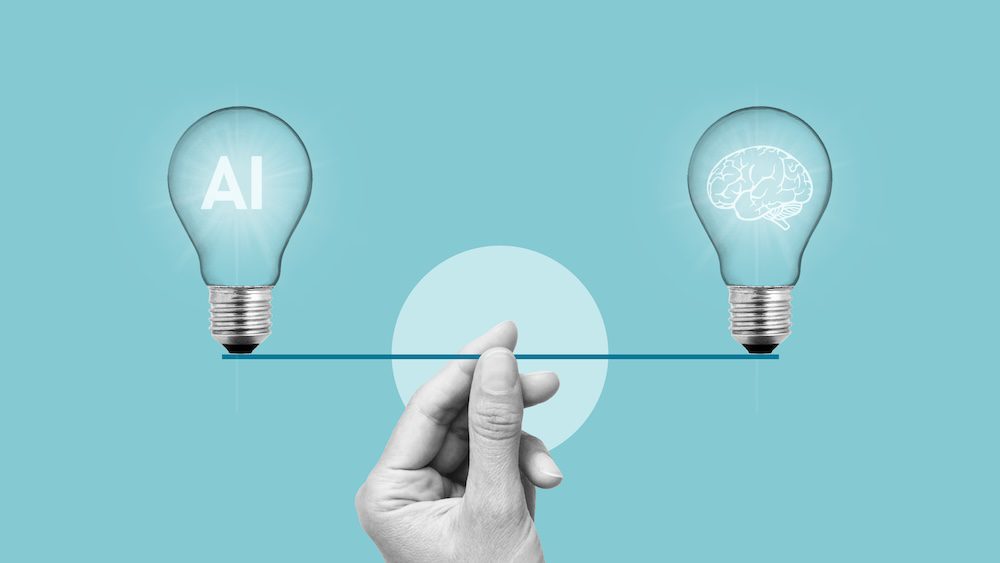
In 2026, AI has evolved into far more than a side project or experimental marketing tool. Today, it is embedded across the marketing stack, a critical part of the tool that marketers need to remain competitive and accomplish their goals. Even the conversation has shifted. Savvy marketers aren’t asking, “Should we use AI?” Instead, they’re asking, “Where should we use AI, and where shouldn’t we?”
Just adopting more AI tools, however, isn’t a marketing strategy. If you want to remain competitive or, even better, stand out from the competition, you need to choose the right tools, use them effectively, and understand the places where AI delivers real value. In addition, make sure you’re updating your skills so you can jump in and take advantage of current opportunities.
AI Search Is Changing How Customers Discover Brands
Not long ago, a traditional Google search was the primary online discovery journey for customers who were looking for information about new products or service options. Today, however, new tools are reducing reliance on the traditional “10 blue links.” The content many searchers see first now includes AI-generated answers, full AI search experiences, or even answers from tools like ChatGPT.
SEO is expanding into AEO/GEO. As a marketer, you need content that both search engines and AI systems can understand, trust, and reference, not only so that your brand appears within those answers, but so that searchers can come to you for more information.
What You Need to Adapt for AI Search
To optimize your brand, you need to focus on being the answer, not simply ranking for a keyword. That means a deeper understanding of what your customers are asking for, how they’re searching, and what you can offer them. As a brand, you need:
- A high level of brand authority to increase your odds of appearing in those searches
- Expertise in your industry
- Original information, including content that’s difficult to find anywhere else
- Consistent messaging, including ongoing content that both AI and search engines can find quickly and effectively
When your content strategy focuses on those pillars, you’re better positioned to ensure that your brand shows up where today’s customers are searching.
AI Is Reshaping Content Marketing
AI has transformed the way many people handle content creation. It can accelerate research, improve brainstorming, generate outlines, speed along first drafts, and even make repurposing and content optimization faster and smoother than ever. You may already have taken advantage of many of those tools, and chances are, your competitors are doing the same.
Here’s the downside: all brands can utilize those same tools, which is creating an explosion of generic, AI-generated material across industries, fields, and areas of expertise.
Adapting Your Content Marketing Plan
With AI readily available to any content marketer that needs or wants it, it’s time to reshape your marketing plan, and that starts with acknowledging that more content does not necessarily mean better marketing. You need strong, quality content that differentiates you from your competitors. That may include:
- Original expertise and thought leadership, including content that is not covered elsewhere
- Customer insights
- Proprietary data that cannot be accessed by just anyone
- Examples and opinions
- Real-world experience
Many marketers are engaged deeply in the “human-created vs. AI-created” debate, but they’re asking the wrong question. To shift your marketing to a more effective strategy and platform, consider whether the content provides genuine value.
AI Is Making Marketing More Personalized
Thanks to AI, marketers can analyze customer behaviour at a deeper level than ever before, allowing them to deliver increasingly relevant experiences for every member of their target market, and customers are coming to expect that high level of personalization whenever they interact with a brand. Customers aren’t looking for the same generic experience everyone else gets. They want recommendations, interactions, and even deals and coupons focused on the way they connect with your brand.
Personalizing Content for Your Customers
There are many ways you can personalize customer interactions and ensure that they are getting the content they want and need, including:
- Unique email content
- Custom website experiences
- Product recommendations based directly on customer behaviours and preferences
- Customized advertising and lead nurturing
If you want customers to genuinely connect with your brand, it’s time to move from broad audience segments toward more dynamic personalization. As you make that move, however, you must strike a balance between personalization and privacy, transparency, and customer trust. Make sure customers know what data you’re using, how you’re collecting it, and what that data collection offers them, and give them the ability to opt out when possible.
Marketing Teams Are Becoming More Productive, But Expectations Are Rising
AI can take on several boring, repetitive tasks like reporting, research, meeting summaries, data analysis, and even campaign variations, automating or accelerating that work so that marketing teams can focus on the elements that still need the human touch. That makes it possible for smaller marketing teams to accomplish more than they ever could before. However, productivity gains are also raising expectations around speed and output, which can leave many marketing teams floundering, especially if they haven’t yet figured out how to maximize the effectiveness of their AI tools. The competitive advantage isn’t necessarily in using AI, it’s in designing workflows around it.
Reconsidering the Process
If you’re looking for ways to enhance productivity across your marketing team, don’t just add in the AI tools, especially if your processes are already inefficient or you’re struggling. Instead, reconsider the process itself. Look for places where AI tools can add genuine value to your efforts.
What AI Is Actually Good at in Marketing
Whether you’re thinking about adding AI to your marketing stack for the first time or looking for new ways to make the most of your AI tools, make sure you’re familiar with the areas where AI provides critical value. That includes:
- Research and information synthesis
- Brainstorming and ideation
- Drafting and repurposing content
- Analyzing large datasets
- Identifying patterns and opportunities
- Creating campaign and creative variations
- Marketing automation
- Reporting and summarizing performance
- Personalization at scale
AI is particularly effective at accelerating work that already has clear objectives, good data and knowledgeable human oversight. As you consider how to best take advantage of everything it has to offer, make sure that you’re focusing its use in those areas and not in the ones that are best handled by a human.
Where Humans Still Matter
AI can produce an answer. It doesn’t necessarily know whether it’s the right answer. An experienced marketing team, complete with human oversight and participation, is still critical in a few key areas.
- Strategy and prioritization
- Understanding customers
- Brand positioning
- Creativity and original ideas
- Emotional intelligence
- Cultural and contextual understanding
- Quality control
- Ethical judgment
- Client relationships
- Making decisions when the data is incomplete
AI increases the value of good judgment rather than eliminating the need for it. By ensuring that you have human checks and balances in the processes that need them, you create a better marketing strategy and campaigns that can genuinely connect with the customers you’re trying to target.
The New Marketing Skill: Knowing How to Work With AI
It’s time to move beyond “prompt engineering” as a standalone skill. AI is here, and it’s become a vital tool in your marketing arsenal. Knowing how to use it correctly is essential. Marketers should understand how to:
- Give AI strong context and instructions
- Evaluate and challenge AI outputs
- Build repeatable AI-assisted workflows
- Choose the right AI model/tool for a task
- Combine multiple tools and data sources
- Recognize hallucinations and inaccuracies
- Protect confidential and customer information
- Know when not to use AI
If you’re still struggling with these new tools, it’s well past the time to invest in some courses or other strategies that will help you learn how to use them.
Skills Marketers Should Be Developing Now
These critical skills will not only help you stand out as a brand but also ensure that you are prepared to take your marketing career to the next level.
- Strategic thinking: As execution becomes easier, deciding what to do becomes more valuable.
- Data literacy: Marketers need to understand data well enough to question AI-generated analysis rather than blindly accepting it.
- AI literacy: Understanding what AI can and cannot do and how different AI systems fit into marketing workflows.
- Customer insight: The ability to understand motivations, problems and buying behaviour remains difficult to automate.
- Creative direction: Generating something is becoming cheap. Knowing what is worth creating isn’t.
- SEO + AEO/GEO: Marketers need to understand how brands gain visibility across both traditional and AI-driven discovery.
- Experimentation: The speed of AI means marketers can test more ideas, but they need strong frameworks for determining what works.
Set yourself up for success by practicing these skills and making them part of your skillset.
What Marketers Shouldn’t Do in 2026
With the prevalence of AI, many marketers are jumping into using AI tools too quickly. Make sure that you don’t:
- Publish hundreds of generic AI-generated articles
- Replace strategy with automation
- Assume an AI answer is accurate
- Upload sensitive company or customer information without understanding how it is handled
- Adopt every new AI tool
- Measure AI success by how much content you produce
- Remove human review from important customer-facing communications
By avoiding these errors, you streamline your marketing processes with the advantages of AI tools without introducing more potential challenges.
What Should Marketing Leaders Do Next?
Ready to take the next steps to marketing success in the age of AI? Follow these simple steps.
- Audit where your team currently uses AI
- Identify repetitive, time-consuming workflows
- Determine where AI can augment—not simply replace—people
- Establish guidelines around AI usage, privacy and quality control
- Invest in AI literacy across the team
- Experiment with AI search/AEO visibility
- Measure business outcomes rather than AI adoption
As you make AI part of your everyday workflows, make sure that you regularly test your successes and failures and know when you may need to increase human oversight.
AI Won’t Replace Great Marketers, But It Will Change What Makes a Great Marketer
AI is rapidly lowering the cost and time required to execute marketing. That makes strategy, judgment, creativity, customer understanding and differentiation more important, not less. The marketers who succeed won’t necessarily be those using the most AI tools. They’ll be the ones who understand where AI creates leverage, where humans create value, and how to combine the two to produce better marketing outcomes.
Not sure how AI should fit into your marketing strategy? McAllister Marketing can help you identify where AI can improve efficiency, strengthen your digital visibility, and drive better results, without losing the human thinking that makes great marketing work. Reach out to learn more about how we can help you accomplish your goals.