Summary
Artificial intelligence is transforming the marketing industry by helping businesses create content, automate workflows, and analyze data faster than ever before. While AI is a powerful tool for improving efficiency and reducing costs, it cannot replace the strategic thinking, creativity, relationship-building, and accountability that experienced marketing agencies provide. The future of marketing lies in combining human expertise with AI-powered tools to achieve better results, stronger branding, and sustainable business growth.
Will AI Replace Marketing Agencies? Why Human Strategy Still Matters in an AI-Driven World
Artificial intelligence is quickly changing how businesses approach marketing. Tools like ChatGPT, Gemini, Claude, Canva AI, and many others can now create content, analyze data, automate workflows, and help with creative projects in seconds.
As these tools become more powerful and easier to access, many business owners are asking the same question: Will AI replace marketing agencies? The answer is more complex than a simple yes or no.
AI is clearly transforming the marketing industry. It helps businesses move more quickly, lower costs, and automate repetitive tasks. However, replacing a skilled marketing agency is a different challenge. While AI is great at execution, successful marketing still needs strategic thinking, creativity, business insight, and accountability.
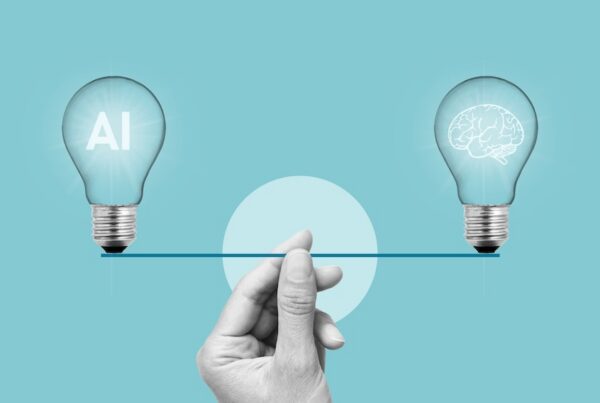
The future of marketing is not a competition between humans and machines. Instead, it’s a partnership that brings together the strengths of both.
What AI Is Already Doing Well
There is no question that AI has become a valuable tool for marketers and businesses alike.
Content Creation
AI can generate a wide variety of marketing content quickly, including:
- Blog post drafts
- Social media captions
- Email campaigns
- Advertising copy
Businesses can use AI to overcome writer’s block, create first drafts, and speed up production timelines. What once took hours can often be completed in minutes.
Research and Analysis
AI also excels at processing large amounts of information.
Common applications include:
- Competitor research
- Keyword discovery
- Market trend analysis
- Data summarization
Rather than spending days manually gathering information, marketers can use AI to identify opportunities and gain insights more efficiently.
Automation
Many organizations are using AI to automate repetitive marketing processes, such as:
- Customer service chatbots
- Email workflows
- Lead nurturing sequences
- Reporting dashboards
Automation allows businesses to stay connected with prospects and customers while reducing administrative workload.
Benefits for Businesses
The appeal of AI is easy to understand. Businesses can benefit from:
- Faster execution
- Lower operational costs
- Improved efficiency
- Greater scalability
For routine tasks and content production, AI can deliver tremendous value.
Where AI Falls Short
Despite its impressive capabilities, AI still has significant limitations.
Strategy Still Requires Human Thinking
AI can generate ideas, but it does not truly understand your business.
It lacks the context needed to make strategic decisions based on:
- Long-term business goals
- Industry-specific challenges
- Competitive positioning
- Customer behavior nuances
AI can suggest marketing tactics, but it cannot fully evaluate whether those tactics align with your company’s broader objectives.
Marketing success depends on making informed decisions that connect business goals with customer needs. That level of strategic thinking still requires human expertise.
Creativity Isn’t Just Content
Many people mistake content creation for creativity.
True creativity involves much more than generating words or images. Effective marketing requires:
- Brand differentiation
- Emotional connection
- Original concepts
- Strategic storytelling
AI often relies on patterns from existing content. While they can build on proven ideas, breakthrough marketing campaigns typically emerge from uniquely human insights and experiences.
The most memorable brands succeed because they create meaningful emotional connections with their audiences, something AI alone cannot replicate.
Human Relationships Matter
Marketing is often a collaborative process involving multiple stakeholders.
Success frequently depends on:
- Client collaboration
- Team alignment
- Stakeholder buy-in
- Community engagement
AI cannot facilitate strategic discussions, build trust, navigate organizational dynamics, or develop relationships with clients and customers.
Those human interactions remain essential components of effective marketing.
AI Can’t Be Accountable
Perhaps the biggest limitation is accountability. AI provides suggestions. Marketing agencies provide recommendations, execution, measurement, and responsibility for outcomes.
When campaigns underperform, agencies analyze the causes, make adjustments, and develop solutions. They stand behind their work and guide clients through challenges. Technology can support decision-making, but it cannot own the results.
What Marketing Agencies Do That AI Can’t
While AI enhances many marketing functions, agencies continue to provide value in areas that require expertise and strategic judgment.
Build Comprehensive Marketing Strategies
Effective agencies create customized plans based on:
- Audience research
- Market positioning
- Competitive analysis
- Growth planning
Rather than focusing on isolated tactics, agencies develop integrated strategies designed to achieve measurable business objectives.
Create Cohesive Brand Experiences
Successful marketing requires consistency across every customer touchpoint.
Agencies help businesses develop:
- Brand strategy
- Messaging frameworks
- Visual identity systems
- Customer journey mapping
These elements work together to create a unified experience that strengthens brand recognition and trust.
Interpret Data and Make Decisions
Data alone does not create results.
Agencies provide context by understanding:
- Why performance changes occur
- Which metrics actually matter
- How campaigns should evolve
- Where new opportunities exist
This ability to interpret information and make informed decisions remains one of the most valuable services agencies provide.
Integrate Multiple Marketing Channels
Modern marketing rarely succeeds through a single channel.
Agencies coordinate efforts across:
- SEO
- AEO (Answer Engine Optimization)
- Paid advertising
- Social media
- Email marketing
- Website optimization
This integrated approach ensures that every marketing activity supports broader business goals.
How AI Is Transforming Marketing Agencies
The rise of AI is not eliminating agencies. Instead, it is reshaping how they operate.
Agencies Are Becoming More Efficient
AI enables agencies to work faster and smarter by supporting:
- Content production
- Research initiatives
- Data analysis
- Reporting processes
Routine tasks that once consumed valuable time can now be completed more efficiently.
More Focus on High-Value Services
As AI handles repetitive work, agencies can dedicate more attention to:
- Strategic planning
- Business consulting
- Brand development
- Growth initiatives
This shift allows agencies to provide greater value while improving outcomes for clients.
Better Results for Clients
AI-powered workflows often lead to:
- Reduced production timelines
- Faster campaign testing
- Improved optimization
- Stronger return on investment
Businesses benefit from both increased efficiency and expert oversight.
The Rise of the AI-Powered Agency
The most successful agencies are not resisting AI—they are embracing it.
Modern agencies increasingly operate using a hybrid model:
- Humans develop a strategy.
- AI supports execution.
- Experts oversee quality control.
- Technology improves efficiency.
This approach combines the strengths of both human expertise and artificial intelligence.
Why This Hybrid Approach Wins
The future belongs to organizations that leverage:
- Human insight and AI speed
- Strategic thinking and automation
- Creativity and efficiency
Rather than replacing marketers, AI amplifies their capabilities.
Should Small Businesses Replace Their Agency with AI?
The answer depends on the business’s goals, resources, and complexity.
When AI Might Be Enough
AI may be sufficient for:
- Solopreneurs
- Early-stage startups
- Businesses with simple marketing needs
- Organizations with limited budgets
For basic content creation and routine marketing tasks, AI can provide a cost-effective solution.
When Professional Support Still Matters
Marketing agencies often deliver greater value for:
- Growth-focused businesses
- Competitive industries
- Multi-channel marketing programs
- Companies seeking measurable ROI
As marketing becomes more complex, strategic guidance becomes increasingly important.
Questions to Ask Yourself
Consider the following questions:
- Do you have a documented marketing strategy?
- Do you know how to measure marketing success?
- Do you have time to manage marketing consistently?
- Are your current efforts producing meaningful results?
The answers can help determine whether AI alone is sufficient or whether professional support would add value.
The Future of Marketing
AI will keep changing marketing in the next few years in dynamic, unexpected ways. However, the future will not see AI replacing agencies. A better prediction is this: AI won’t take over marketing agencies. Instead, agencies that use AI will outperform those that don’t.
The marketing world is changing quickly. The agencies that succeed will be those that adopt AI as a strong tool while still providing the strategy, creativity, skill, and accountability that technology alone cannot offer. Businesses that blend human expertise with AI-driven efficiency will have the biggest competitive edge.
The lesson behind the tech? Future-proofing your marketing strategy has never been more important.
Is Your Business Ready?
AI is changing marketing, but it doesn’t replace the need for agencies. Humans will always be valuable in a world of growing technology and new business opportunities. While artificial intelligence can create content, automate tasks, and accelerate research, it cannot replace strategic thinking, creative vision, organic relationships, or accountability.
The most successful businesses will use both AI and marketing knowledge.
Want to know how AI can enhance your marketing strategy while still delivering results? Get in touch with McAllister Marketing to discover how we merge proven marketing skills with the latest AI tools to help businesses grow smarter, faster, and more effectively.
FAQs
Will AI completely replace marketing agencies?
No. While AI can automate tasks like content creation, data analysis, and reporting, it cannot replace strategic planning, creative thinking, relationship-building, and accountability. The most successful agencies use AI to enhance their services rather than replace human expertise.
What marketing tasks can AI handle effectively?
AI excels at generating content drafts, conducting research, analyzing large datasets, automating workflows, creating reports, and supporting customer service through chatbots and email automation.
Where does AI fall short in marketing?
AI lacks the business context, emotional intelligence, and strategic judgment needed to make complex marketing decisions. It cannot fully understand customer motivations, brand positioning, or long-term business goals.
How are marketing agencies using AI today?
Modern agencies use AI to streamline research, content production, campaign optimization, and reporting. This allows them to spend more time on high-value services such as strategy development, branding, consulting, and growth planning.
Should small businesses use AI instead of hiring a marketing agency?
It depends on the business’s goals and complexity. AI may be sufficient for basic marketing needs, but businesses seeking growth, competitive advantages, multi-channel campaigns, and measurable ROI often benefit from the expertise and strategic guidance of a marketing agency.